
Best CGA Games That Still Look Great Today

The IBM Color Graphics Adapter (CGA) was one of the earliest graphics cards for IBM PCs, introduced in 1981. It supported limited color graphics and resolutions, including 320×200 pixels with four colors and 640×200 pixels in monochrome. CGA graphics became iconic in early PC gaming, featuring distinctive color palettes, pixel art and visual limitations that defined the look of many classic DOS games.
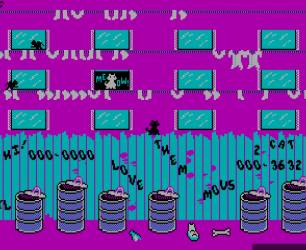
Alley Cat is a classic 1984 video game developed by Synapse Software for the Atari 8-bit and Commodore 64 platforms. In the game, players control a mischievous alley cat as they navigate through a series of challenging obstacles and puzzles to reach their goal. The game is known for its colorful graphics, catchy music, and addicting gameplay that kept players coming back for more. Alley Cat has since become a cult classic amon...
The Oregon Trail is an educational simulation that places players in the role of a pioneer travelling across the American frontier during the nineteenth century. Players must manage supplies, hunt for food, make decisions about travel, deal with illness and overcome a variety of obstacles along the way. The game's educational value lies in its combination of historical context, resource management and decision-making.

Early...
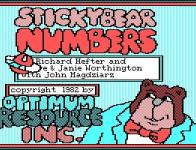
Stickybear Numbers is part of the popular Stickybear educational software series, which was designed to help young children learn basic skills through playful computer activities. In this title, children practise number recognition and mathematical concepts using colourful visual exercises and interactive challenges. The friendly Stickybear character helps make learning feel approachable and entertaining.

The IBM PC version...
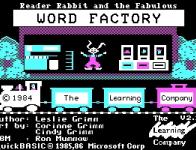
Reader Rabbit is one of the best-known early educational computer games, designed to help young children develop reading, spelling and basic language skills. The original DOS-era versions used simple graphics and interactive activities to make learning letters, words and sentence construction feel more like playing a game than completing exercises.

Its colourful, character-driven approach was particularly well suited to the...
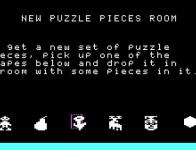
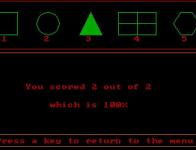
Gertrude's Puzzles is a collection of logic and mathematics challenges designed to encourage children to think creatively and solve problems. The game presents a variety of puzzles that require players to recognise patterns, work through logical problems and develop their reasoning skills. Rather than relying on fast action, it focuses on experimentation and the satisfaction of finding a solution.

The DOS version supports C...
Bumble Games is a collection of educational activities designed to encourage children to learn through interactive play. Instead of focusing on a single subject, the program presents a selection of simple games and challenges intended to develop different skills. Its playful approach makes it an example of the early trend toward combining multiple learning activities into one computer program.

Published for IBM-compatible c...
Bouncy Bee Learns Letters is an educational game aimed at young children who are beginning to recognise letters and develop early literacy skills. Using a playful bee-themed environment, the game introduces letter recognition through simple interactive activities that encourage children to identify and learn the alphabet. Its child-friendly presentation makes it approachable for very young computer users.

The DOS release su...
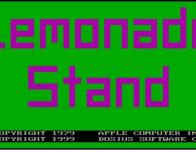
Lemonade Stand is a classic business simulation in which players operate a small lemonade-selling business. Each day, they must decide how much lemonade to prepare, how much sugar and ice to use, what price to charge and how to respond to changing weather conditions. The objective is to maximise profits while balancing costs, demand and customer satisfaction.

Although its presentation is extremely simple, Lemonade Stand int...
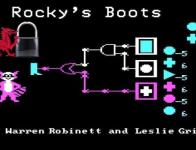
Rocky's Boots is an unusual educational game that teaches children the fundamentals of logic, Boolean circuits and computer-like reasoning through interactive puzzles. Players experiment with different logical components, switches and machines to build circuits capable of completing tasks. The game encourages experimentation, problem-solving and an understanding of how logical systems work.

Developed as an educational exper...
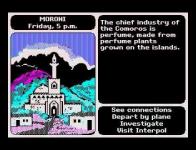
Where in the World Is Carmen Sandiego? combines detective gameplay with geography and general knowledge. Players work as investigators attempting to track down criminals by following clues about countries, cities, landmarks, currencies and other geographical details. Each case requires careful reasoning, knowledge and the ability to interpret clues correctly before the suspect escapes.

The original game helped popularise ge...
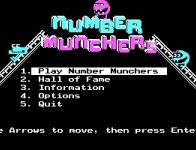
Number Munchers takes the formula of Word Munchers and applies it to mathematics. Players navigate a grid filled with numbers, selecting values that satisfy different mathematical rules such as multiples, factors or prime numbers. As they progress, the challenges become more demanding, encouraging players to practise mathematical reasoning while avoiding enemies.

Its simple presentation and arcade-inspired gameplay made it ...
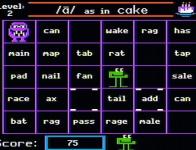
Word Munchers is a classic educational arcade game that challenges players to identify words matching specific grammatical or linguistic rules. Players control a character called the Muncher across a grid, eating the correct words while avoiding dangerous enemies known as Troggles. Its gameplay is simple but surprisingly engaging, turning vocabulary, spelling and language exercises into an arcade experience.

The game became...
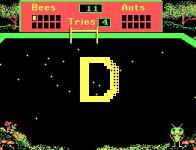
Googol Math Games is a collection of arcade-style mathematical challenges designed to make arithmetic more engaging. The game combines questions and numerical problems with action-oriented gameplay, encouraging players to solve mathematical tasks while navigating different challenges. Its approach helps turn repetition and practice into something more interactive and entertaining.

Released in 1989 as shareware, the game sup...
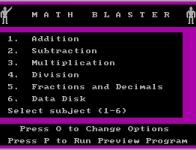
Math Blaster turned arithmetic practice into an action-oriented adventure in which players had to solve mathematical problems to progress through challenges. The game helped make mathematics more appealing to children by incorporating arcade-style gameplay, timed tasks and rewards instead of relying solely on traditional classroom exercises.

Early PC versions were designed for the hardware of the period, and some editions w...

Rankified uses cookies.

To make sure Rankified works properly, we always use functional and analytical cookies and similar techniques. You can choose your own Rankified with personal recommendations and advertisements, so that we better match your interests.

Read more about our use of cookies here.

Accept Decline