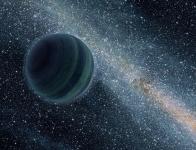
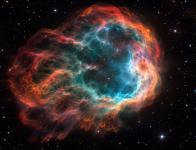
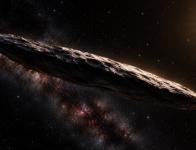
CFBDSIR 2149-0403 is a candidate free-floating planetary-mass object that attracted attention because it appears to exist without a clearly identified host star. Objects of this type are often described as rogue planets or planetary-mass brown dwarfs, depending on their properties and classification. They are particularly difficult to study because they do not receive illumination from a nearby star.
The object has been inv...
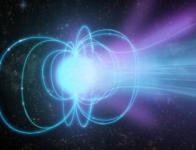
SGR 1935+2154 is a magnetar, an extremely dense neutron star with an extraordinarily powerful magnetic field. The object became particularly famous after producing a radio burst that was unusually powerful for a magnetar within our own galaxy. This event helped connect at least some fast radio bursts with magnetar activity.
Magnetars can produce violent bursts of radiation and energy through processes involving their magnet...
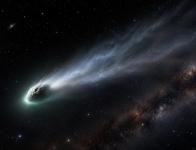
2I/Borisov was the first confirmed interstellar comet observed passing through our Solar System. Discovered in 2019 by amateur astronomer Gennady Borisov, the comet displayed a recognizable coma and tail, indicating that it was actively releasing gas and dust as it approached the Sun. Its trajectory showed that it had originated from outside the Solar System.
Unlike 'Oumuamua, 2I/Borisov behaved much more like a conventiona...
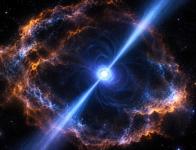
The Vela Pulsar is a rapidly rotating neutron star formed during a supernova explosion thousands of years ago. It emits powerful beams of radiation and is surrounded by a complex environment shaped by energetic particles. Its rotation and magnetic field produce regular pulses, making it an important object for studying neutron stars and their behavior.
The Vela Pulsar is particularly famous for occasional sudden increases i...
The Medusa Nebula, also known as Abell 21, is an enormous planetary nebula whose glowing filaments resemble the hair of the mythological Medusa. It formed as a dying star expelled its outer layers into space, creating a complex structure of gas that is illuminated by the remaining stellar core. Its faint, sprawling appearance makes it a particularly unusual nebula.
The nebula's delicate filaments and irregular structure rev...
The Ghost Nebula, commonly associated with IC 63, is a cloud of gas and dust illuminated and influenced by a nearby bright star. Its faint, delicate structure can appear ghostly in astronomical images, with areas of glowing gas and dark dust creating unusual patterns. The nebula is shaped by radiation and stellar winds from its nearby star.
The object provides a fascinating example of how stars can influence the surrounding...
The Red Rectangle Nebula is a distinctive astronomical object surrounding a binary star system. Its unusual shape resembles a rectangle or X-shaped structure, with bright bands and complex patterns of gas and dust extending outward from its central stars. The nebula's geometry is believed to be influenced by the interaction between the stars and surrounding material.
The Red Rectangle is particularly interesting because its...
The Black Widow Pulsar is a rapidly rotating neutron star that is gradually destroying its companion star through intense radiation and particle winds. The pulsar's powerful emissions heat and erode the companion, which is a small star or stellar remnant orbiting extremely close to the neutron star. The system's name reflects the dramatic interaction between the two objects.
Black Widow pulsars are important because they re...
The Necklace Nebula is a planetary nebula formed by a dying star system, featuring an unusual ring of glowing gas containing bright knots that resemble beads. The nebula's distinctive shape is believed to have developed as material was expelled from a stellar system containing two stars. The gas forms an expanding structure that creates a spectacular ring-like appearance.
The Necklace Nebula is particularly interesting beca...
The Crab Pulsar is a rapidly rotating neutron star located at the center of the Crab Nebula. It formed following a supernova explosion observed by astronomers in 1054 and now rotates roughly thirty times per second. Its intense magnetic field and rapid rotation produce beams of radiation that sweep through space, creating pulses detectable from Earth.
The Crab Pulsar is remarkable because it allows astronomers to observe a ...
The Cosmic Microwave Background Cold Spot is an unusually large region of the cosmic microwave background radiation that appears colder than the surrounding areas. The cosmic microwave background is the ancient radiation left over from the early universe, and its temperature variations provide information about the structure and history of the cosmos. The Cold Spot stands out because its size and characteristics appear unusual...
Dragonfly 44 is an unusual ultra-diffuse galaxy that attracted attention because it appeared to contain a surprisingly large amount of dark matter relative to its visible stars. The galaxy has a very low surface brightness, making it difficult to detect despite its substantial size. Its appearance is unusual because it resembles a large galaxy but contains relatively few visible stars.
The original estimates of its dark mat...
XTE J1814-338 is an unusual astronomical system containing a rapidly rotating neutron star that produces pulsating X-ray emissions. The system belongs to a class of objects known as accreting millisecond pulsars, where a neutron star receives material from a companion star. As matter falls toward the neutron star, it releases enormous amounts of energy and can produce intense X-ray radiation.
These systems are difficult to ...
The Boomerang Nebula is an unusual astronomical object known for its extreme temperature and distinctive shape. Located in the constellation Centaurus, it is a cloud of gas being expelled by a dying star. The nebula became famous because measurements indicated that it was colder than the cosmic microwave background in certain regions, making it one of the coldest naturally occurring environments known.
Its unusual temperatu...
The Antennae Galaxies are a pair of interacting galaxies that are currently undergoing a dramatic collision. Their long tidal tails, which resemble insect antennae, formed as gravitational forces pulled stars, gas and dust out of their original structures. The galaxies are experiencing intense regions of star formation as their gas clouds collide and compress.
The collision is expected to eventually produce a single larger ...
55 Cancri e is an extremely hot super-Earth orbiting close to its host star. The planet completes an orbit in less than a day and experiences temperatures far higher than those found on Earth. Its close proximity to the star makes it an unusual world where surface conditions, atmosphere and geological processes may be radically different from those of our own planet.
The planet was once widely popularized as a possible diam...
Hoag's Object is an extraordinarily unusual galaxy featuring a nearly perfect ring of young stars surrounding a central core of older stars. Unlike typical spiral galaxies, it lacks the familiar spiral arms and appears almost like a cosmic bullseye. The ring is separated from the central region by a gap that makes the structure particularly striking in astronomical images.
Astronomers have proposed several explanations for ...
The Dragonfly Nebula is a nickname used for certain nebular structures that resemble the delicate wings or elongated body of an insect when viewed through astronomical imaging. Nebulae can develop remarkably unusual shapes as gas, dust, radiation and stellar winds interact over thousands of years. The appearance of some nebulae is so striking that they receive informal names based on familiar objects or animals.
The structu...
FRB 121102 is one of the most famous fast radio burst sources ever discovered because it was the first known source of fast radio bursts to produce repeated signals. Fast radio bursts are extremely brief but powerful radio emissions originating from distant regions of space. The repeated nature of FRB 121102 demonstrated that at least some of these events were not simply one-time explosions or destructive phenomena.
The sou...
The Great Attractor is a large-scale gravitational anomaly that influences the movement of galaxies across a vast region of the universe. Astronomers discovered that the Milky Way and many nearby galaxies are moving in a particular direction relative to the cosmic background radiation, suggesting the presence of a massive concentration of matter. The region is located behind the plane of the Milky Way, where dust and stars mak...
The Boötes Void is an enormous region of space containing remarkably few galaxies compared with surrounding cosmic structures. Located in the direction of the constellation Boötes, the void spans hundreds of millions of light-years and is one of the largest known examples of a cosmic void. Its vast size makes it particularly striking when compared with the dense clusters and filaments that dominate much of the observable uni...
The Wow! Signal was a powerful and unusual radio signal detected in August 1977 by the Big Ear radio telescope in Ohio. The signal lasted approximately 72 seconds and appeared to originate from a region of the sky near the constellation Sagittarius. Its intensity and frequency characteristics were sufficiently unusual that astronomer Jerry Ehman famously wrote "Wow!" beside the printed data, giving the signal its name.
Desp...
'Oumuamua was the first confirmed interstellar object detected passing through our Solar System. Discovered in October 2017, it moved along a trajectory that showed it had originated beyond the Sun's gravitational influence. Its unusual shape, rapid rotation and unexpected acceleration made it unlike most asteroids or comets observed previously.
Astronomers debated its physical characteristics and behavior, particularly bec...
Tabby's Star, also known as KIC 8462852, became famous after astronomers observed unusual and irregular changes in its brightness. Unlike typical stars that dim in predictable ways when planets pass in front of them, Tabby's Star experienced large and seemingly irregular dips in brightness. Some of these events were so dramatic that they triggered widespread speculation about what might be causing them.
The leading explanat...
Hanny's Voorwerp is one of the most unusual astronomical objects ever discovered, appearing as a glowing green cloud of gas near a distant galaxy. It was discovered in 2007 by Dutch teacher Hanny van Arkel while she was participating in the Galaxy Zoo citizen science project. The object is enormous, spanning tens of thousands of light-years, and its unusual color and shape immediately attracted the attention of astronomers.
...